Thursday, August 8, 2019

The triumph of the squares


The 50th anniversary of the first moon walk has caused me a full-blown geek-out. I remember the space race with fondness. Aerospace was the biggest story out there. The 50s and 60s saw an explosion of technological growth. Some favorites of mine from that era include the F-104, the U-2, the SR-71, the Boeing 707, 727, and 747—the "jet age" planes that changed travel and even music by democratizing flight.

I "graduated" from my Erector Set stage straight into model airplanes—the ones that flew and made a bunch of noise. And even though the space race was on, I was never seduced into model rocketry. It was expensive and the available examples didn't do much—restricted as they were by the same sort of regulations as fireworks (which where I lived were essentially outlawed.)

Real-world rockets were kind of boring as well. The most notorious of the test pilots out at Edwards Air Force Base (Chuck Yeager) even labeled the early astronauts as nothing more than "spam in a can." After all, the first "American" in space was a chimp. But that wouldn't last long. The original astronauts were extremely competent test pilots and before long, they were demanding greater control of their missions.

Even so, I was far more interested in the flight testing at Edwards where they pushed the limits of supersonic flight with real airplanes like fighters jets. But soon, they eventually embraced rocketry with the incomparable X-15. They had to. If you want to set speed and altitude records, eventually you run out of atmosphere where air-breathing power-plants simply do not work. The X-15 was insanely fast, complex and dangerous. It wasn't going to be piloted by a chimp. In fact, these things required the skills of the best pilots we could find. And I had a favorite—Neil Armstrong.


Armstrong was a superb pilot. On one mission a failure of a new instrument caused him to fly nearly 50 miles beyond where he was supposed to turn back to Edwards. His propulsion was spent so he was flying a glider with the aerodynamic performance (4:1 glide ratio) of a brick. He nursed that X-15 back to Edwards coming over the lake bed at less than 100'. This would be the same guy who landed on the moon with less than 30 seconds worth of fuel.

His degree in aeronautical engineering came from Purdue. This is NOT a school that grants engineering degrees to goof-offs. In fact Purdue would contribute a serious fraction of the top engineers to the space program. The rest mostly came from State Universities in the USA Midwest like Michigan.

He grew up in Wapakoneta, Ohio about an hour north of Dayton—the home of the Wright Brothers. His father paid for a ride in a Ford Tri-motor at 6. He soloed an airplane on his 16th birthday (the legal minimum age) and spent much of his childhood building model airplanes. This last fact is what endeared him to me. I too built model airplanes which were insanely difficult to get to fly well. The problem is that models and real airplanes conform to the same laws of nature which means to indulge in this hobby, it really helps to learn things like fluid dynamics, lightweight structures, and drag coefficients. You know—kid stuff.

Yes that is me with a model that required at least 150 hours to build. Didn't fly very well—too little power and too much paint.


Flying is something that only happens on the boundaries of perfection. You can get 15,000 things right and one wrong and your precious airplane is a flaming heap. Good pilots are followers of check lists—as diligent on the 1000th time through as the first. They read the operator's manuals. They know what all those switches do. They understand that dishonesty and corner-cutting could end their lives.

Armstrong was notorious for insisting on understanding every part of his aircraft. He wanted to know what everything was supposed to do and what it COULD do in an emergency. But even better, he understood that flying is a team effort and it was critical for every member of the team to take their jobs seriously. Here's what he says about the people who built Apollo.
Armstrong: Each of the components of our hardware were designed to certain reliability specifications, and for the majority, to my recollection, had a reliability requirement of 0.99996, which means that you have four failures in 100,000 operations. I've been told that if every component met its reliability specifications precisely, that a typical Apollo flight would have about [1,000] separate identifiable failures. In fact, we had more like 150 failures per flight, [substantially] better than statistical methods would tell you that you might have.

I can only attribute that to the fact that every guy in the project, every guy at the bench building something, every assembler, every inspector, every guy that's setting up the tests, cranking the torque wrench, and so on, is saying, man or woman, "If anything goes wrong here, it's not going to be my fault, because my part is going to be better than I have to make it." And when you have hundreds of thousands of people all doing their job a little better than they have to, you get an improvement in performance. And that's the only reason we could have pulled this whole thing off.

The Triumph of the Squares

Nearly a year after the landing of Apollo 11, NASA head Thomas Paine gave a commencement address at Worcester Polytechnic Institute where he declared that the successful moonshot was a triumph of the squares, the validation of the values of "Squareland" which he listed as foremost a profound faith in reason. It was "outward looking and mathematical," was "time oriented...and deeply concerned with future consequences." It "accepts as true only rational facts and theories which predict future events with mathematical precision under rigorous standards of reproducibility. Only Squareland's rationality could ensure the "crops yield, lights light, bridges carry loads, children avoid polio, and men walk on the moon." In fact. to Squarelanders, a solid definition of "truth" might be "that which successfully takes two men to the moon."

This speech made me groan and roll my eyes. On one hand, going to the moon really DID require the "square" virtues that Paine so celebrated. Beside, I was clearly a prototypical "square" (see photo above.) Building airplanes sort of demands squareness. I was also the son of a small-town clergyman—building airplanes was one way of staying above the reproach of the church ladies. On the other hand, this speech set off the scolds who assumed that "square" virtue included an unquestioning support of the Vietnam War, a marked preference for booze over pot, white shirts and neck ties, and above all, short hair for men.

Unfortunately, the space race had been sold as Cold War macho and a real-live Nazi named Wernher von Braun was chosen to head the effort. So the link between the space race and unbridled militarism was pretty damn short. NASA was acutely aware of this problem. It was one of the reasons that Neil Armstrong was chosen to take the first step—he was the only civilian pilot to have reached his advanced status. This turned out to be an excellent choice. In the goodwill tour following the moon landing, he charmed his listeners around the world into believing that this was a triumph of human (not American) genius. The reason this worked is because Armstrong deeply believed it was true.

But while the moon landing was clearly a triumph of the squares, the squares would not triumph. By 1972 the Apollo program was ended and no human has gone beyond low-earth orbit since. The can-do attitude of Apollo has so completely disappeared from American culture that many now actually believe the landing was a hoax. It is probably more accurate to call Apollo "Peak Square" because the vast majority of my fellow citizens in 2019 look on a profound faith in reason as a weird psychological disorder.

BBC calling

In the summer of 1970, I found myself in UK. I kept running into people who wanted to talk about the moon landing. Most of them were very well informed. I had to scramble to keep up at times. One night in London, a waitress in a pub sat down next to me and asked if I was the American space expert she had overheard. I humbly admitted I was probably who she was looking for but I was FAR from being an expert. Then she asked, "How did they know how long the burn for the lunar insertion midflight correction should be? And how did they know they were pointing the engine in the right direction?" I didn't have a canned response so I pulled out my understanding of inertial navigation. It wasn't a very good answer but she seemed to understand, smiled and went back to work. I was left wondering just how a random London barmaid knew enough to even ask such good questions.

In 1978, PBS would air a 10-part series called Connections starring a fascinating storyteller named James Burke. (There was a companion coffee-table book by the same name). Burke had carved out an awesome assignment for himself. He wanted to explain the products of the modern world (computers, plastics, powered flight, etc.) in such a way that his listeners would understand how their world came to be. It was absolutely brilliant. Episode #1 The trigger effect traced the development of a modern city like New York back to the invention of the plow. The nine that would follow were equally good. Somewhere along the way we are informed that Burke was the man who covered Apollo for BBC.

AHA! That explained why the Brits knew so much about the moon landing—at least partly. So in the near-infinity of Apollo 11 at 50 coverage on YouTube, I went looking to see if I could find any of Burke's descriptions. I found a good one—an hour of Apollo highlights.


Just in case you need a reminder of how utterly lame the Apollo coverage was on USA corporate media, here is an example from ABC. I am pretty sure all the CBS and ABC coverage of the whole mission can be found at YouTube.

Of all the footage of the Apollo 11 mission that I have uncovered in the past few months, the following may be my favorite. It was done by NASA and has even more in capsule footage than the recently released Blu-Ray of Apollo 11. Of course, the new version has far superior imagery because restoration techniques are so much better. But this one is narrated by Wernher von Braun himself and the technique he used is to compare the 1969 effort against the description of a trip to the moon from Jules Verne's 1865 From Earth to the Moon.


As for the speculation that the Apollo program could provide a template for how this nation should take on the challenges of climate change, my responses are:

It might work
  • If we can restock our seriously depleted supply of "squares."
  • If we can find leadership that understands that this problem will be at LEAST 1000 times more difficult than the moon landing—and that's the best reason to do it.
The HILL looked at this possibility in more depth: Apollo as model for climate change.

Sunday, August 4, 2019

Week-end Wrap - Political Economy - August 3, 2019

Week-end Wrap - Political Economy - August 3, 2019
by Tony Wikrent
Economics Action Group, North Carolina Democratic Party Progressive Caucus

Upcoming events

August 7: Film Screening of Zero Weeks with Congresswoman Adams (Charlotte)
[NC AFL-CIO 8-2-19]
The award-winning documentary film Zero Weeks explores the crisis of unpaid leave in America. Immediately following the screening of the film will be a discussion featuring leaders working on paid leave for all.
September 2: Charlotte Labor Day Parade
[NC AFL-CIO 8-2-19]

September 19-20: 62nd Annual NC AFL-CIO Convention (Charlotte)[NC AFL-CIO 8-2-19]

Strategic Political Economy

Jeffrey Epstein, Trump’s Mentor and the Dark Secrets of the Reagan Era
[MintPress, via Naked Capitalism 8-1-19]
Starting first with mob-linked liquor baron Lewis Rosenstiel and later with Roy Cohn, Rosenstiel’s protege and future mentor to Donald Trump, Epstein’s is just one of the many sexual blackmail operations involving children that are all tied to the same network, which includes elements of organized crime, powerful Washington politicians, lobbyists and “fixers,” and clear links to intelligence as well as the FBI.
Some of the worst memories of my community organizing days in the 1980s involve my trying to convince people that USA’s industrial base was being destroyed by takeovers largely financed with money from organized crime. People just did want to hear the details. They especially did not want to hear that St. Ronnie’s political career had been promoted by the mob. Amazingly, the people most resistant to these facts were the “organized” leftists in CPUSA and SWP. The communists and socialists almost invariably dismissed the details of these organized crime connections, and wanted only to discuss impersonal theoretical forces like “historical materialism” and “capitalist accumulation.” I came to detest talking to them.

For three decades now, I have occasionally referred to this issue of organized crime taking over the USA industrial economy, and hypothesized that one major effect has never been studied: replacing competent industrial management with the criminal mentality and inclinations of the mob-financed corporate raiders. It was Jon Larson at RealEconomics who about 15 years ago pointed me to Thorstein Veblen’s (The Theory of the Leisure Class) explanation of how “Leisure Class” predatory elites are “barbarians: who gain power through force and fraud: “The traits which characterise the predatory and subsequent stages of culture, and which indicate the types of man best fitted to survive under the rĂ©gime of status, are (in their primary expression) ferocity, self-seeking, clannishness, and disingenuousness — a free resort to force and fraud.” Veblen explained how the rise of criminal predators to economic power creates a pecuniary culture.

GND - An opportunity too big to miss

[Bill Mitchell], via Naked Capitalism 7-30-19]
“At the basis of the [standard neoclassical microeconomics] ‘solution’ is the belief that there is a trade-off between, say, environmental damage and economic growth (production). And the market failure skews that trade-off towards growth at the expense of environmental health. So all that is needed is some intervention (a tax) that will skew the trade-off back to something more preferable. The problem is that the whole idea that there is a trade-off between protecting our environment and economic production is flawed at the most elemental level.

There is no calculus (which underpins this sort of microeconomic reasoning) that can tell us when a biological system will die. The idea that we can have a ‘safe’ level of pollution, regulated via a price system, is groundless and should not form part of a progressive response. Carbon trading schemes (CTS) are neoliberal constructs which start with the presumption that a free market is the best way to organise allocation.” 
Lamber Strether adds: "Worth repeating: Mark Blyth says that “Markets cannot internalize their externalities on a planetary scale. They just can’t. It’s impossible.” "

Sunday, July 28, 2019

Week-end Wrap - Political Economy - July 27, 2019

Week-end Wrap - Political Economy - July 27, 2019
by Tony Wikrent
Economics Action Group, North Carolina Democratic Party Progressive Caucus

Strategic Political Economy

These journalists exposed the corruption that led to Puerto Rico’s mass protests
[CNN, via Naked Capitalism 7-24-19]

The World’s Biggest Lawsuit, Juliana v. United States, will force US government to stop climate change
Lambert Strether, July 25, 2019 [Naked Capitalism]
Juliana v. United States is a big and complicated case that has now advanced through two administrations. The original complaint was filed in September 2015; Judge Ann Aiken of Oregon district court rejected the government’s motion to dismiss the case in November 2016.... The American Bar Association, in “Can Our Children Trust Us with Their Future?,” describes the scale of the case and the stakes:
The 2016 ruling in Kelsey Cascadia Rose Juliana v. USA is one of the greatest recent events in our system of law. (See Opinion and Order, Case No. 6:15-cv-01517-TC, US District Court for Oregon, Eugene Division. Anne Aiken, Judge, filed 11/10/16.) A group of children between the ages of eight and nineteen filed suit against the federal government, asking the court to order the government to act on climate change, asserting harm from carbon emissions. The federal government’s motion to dismiss was denied. Although I am not involved in the case, I am a lifelong environmentalist, and I teach environmental law (to non-law students). This case is a shining example of what law can be. This case gives me hope that we will not continue to cooperate in our own destruction, and future generations will be able to rely on us to uphold the spirit of the law and purpose behind government....
So Juliana v. United States is a lawsuit that’s being sponsored and facilitated by Our Children’s Trust, which is a nonprofit organization in Eugene, Oregon, that’s been working on atmospheric climate litigation to try to deal with the climate crisis for a while. So our lawsuit was filed in August of 2015, with 21 plaintiffs from all over the country that each have their own complaint, as part of a large declaration that gives a standing to sue the U.S. Federal Government. And basically, we’re asserting that the U.S. Federal Government has known since 1960 that climate change could be potentially disastrous. We have proof from administrations going back all the way to the Johnson administration, saying that they knew climate change could be an issue and they knew that fossil fuel infrastructure was causing it. And the U.S Federal Government still chose to take direct action to continue to perpetuate the fossil fuel industry and the U.S. fossil fuel economy that we have. 
And we’re asserting that by taking that direct action, they’ve disproportionately put the rights of young people at risk, and the rights of life liberty and property as promised to us in the Constitution....
....
From The New Yorker, in “The Right to a Stable Climate Is the Constitutional Question of the Twenty-first Century“:

Judge Aiken had found that the plaintiffs had standing to sue because they had demonstrated three things: that they had suffered particular, concrete injuries; that the cause of their injuries was “fairly traceable” to the government’s actions; and that the courts had the ability, at least partially, to remedy these injuries. On the first two parts of standing, the government’s case is weakening by the minute, owing especially to the growing body of attribution science—studies published in peer-reviewed journals that directly link extreme weather events, such as huge hurricanes and raging wildfires, to climate change. “Evidence to meet the standing burden has gotten much stronger,” Ann Carlson, an environmental-law professor at U.C.L.A., told me....
.... 
Here is a lawyerly disquistion on the public trust doctrine from the American Bar Association, “Climate Change Litigation: A Way Forward“, with citations and everything....
CBS reporter Steve Croft, in “The climate change lawsuit that could stop the U.S. government from supporting fossil fuels,” interviews Julia Olson, an Oregon lawyer, and the executive director of the NGO, Our Children’s Trust, which initiated Juliana:

“[Olson] began constructing the case eight years ago out of this spartan space now dominated by this paper diorama that winds its way through the office.”

OLSON : So this is a timeline that we put together… [D]uring President Johnson’s administration, they issued a report in 1965 that talked about climate change being a catastrophic threat. Every president knew that burning fossil fuels was causing climate change. 
Fifty years of evidence has been amassed by Olson and her team, 36,000 pages in all, to be used in court.

OLSON: Our government, at the highest levels, knew and was briefed on it regularly by the national security community, by the scientific community. They have known for a very long time that it was a big threat. 
KROFT: Has the government disputed that government officials have known about this for more than 50 years and been told and warned about it for 50 years? 
OLSON: No. They admit that the government has known for over 50 years that burning fossil fuels would cause climate change. And they don’t dispute that we are in a danger zone on climate change. And they don’t dispute that climate change is a national security threat and a threat to our economy and a threat to people’s lives and safety. They do not dispute any of those facts of the case.Steve Kroft: So you’ve got them with their own words. 
OLSON: We have them with their own words. It’s really the clearest, most compelling evidence I’ve ever had in any case I’ve litigated in over 20 years. 
30,000 pages. It looks like there’s a reason Juliana has survived as long as it has.

Sunday, July 21, 2019

Week-end Wrap - Political Economy - July 20, 2019

Week-end Wrap - Political Economy - July 20, 2019
by Tony Wikrent
Economics Action Group, North Carolina Democratic Party Progressive Caucus

Strategic Political Economy

"Can the Left Even Understand Why the Right is winning?" 

Philip Mirowski, who has detailed the history of the "neoliberal thought collective," the Mont Pelerin Society, posted the first draft of a new paper,  "Can the Left Even Understand Why the Right is winning?" It can be viewed if you register with www.academia.edu and Mirowski grants you permission. Explaining the rise of Trump and a conservatism that is increasingly open about its bigotry,  Mirowski rejects the "bromidic term ‘populism’" and points instead to
the recent bounty of exceptional work on the history of neoliberalism [including] Quinn Slobodian, Globalists (Harvard, 2018); Wendy Brown, Undoing the Demos (Zone, 2015); Thomas Biebricher, The Political Theory of Neoliberalism (Stanford, 2018); Nancy MacLean, Democracy in Chains, (Viking, 2017); Melinda Cooper, Family Values (Zone, 2017); and Jessica Whyte, The Morals of the Market, (Verso, 2019). 
Mirowski observes:
...it seems many activists on the left hold out few ambitions for any sort of ‘fusionist’ project themselves, and instinctively shy away from an explicit political economy, and therefore have not been capable of understanding the relative unity of the forces arrayed against them. If someone suggests otherwise, the tendency has been to disparage such thinking as tainted by ‘conspiracy theories’....
The biggest intellectual failure of the left is its demonstrated incapacity to theorize the role and significance of markets. Curiously, unlike the most sophisticated neoliberals, much of the left still buys into the myth of the government vs. the market. That is, they imagine a separate entity called government existing outside of something called ‘the market’, with the former possessing the wisdom to identify ‘market failures’ and rectify them with judicious ‘regulation’.
After discussing how neoliberals themselves have not agreed on any exact definition of "markets" -- perhaps intentionally ("to render political action by the masses so difficult as to be permanently stymied, both by restricting the franchise but also by the strategic production of ignorance, which renders political understanding inchoate") -- Mirowski gets to his key critique of the left's ignorance concerning neoliberalism:
There are two very important facts about neoliberals that the left needs to take to heart: [1] They do not believe in laissez faire, but are unrepentantly constructivist about government—that is, they acknowledge the tenet that their minions must occupy the government at whatever level (local, national, transnational) and in whatever ways are deemed effective to bring about the sort of ‘reforms’ they believe are urgent; and [2] They take seriously the epistemic premise that people are generally imperfect cognitive beings, and that (their definition of) The Market knows more than any human being ever could about the world. Both principles may seem rather paradoxical given their publicly stated doctrines, something that numerous writers have explored in detail.  But those on the Left seem especially incapable of taking either one seriously, and thus to attain understanding how these two principles interact. 
Ever since Hillary Clinton lost a presidential election that was uniquely hers to lose, I have thought it almost comical that we have Democratic Party elites and liberal leaders who, on one hand, have repeatedly rejected the argument that the creation and promotion of movement conservatism amounts to a dedicated conspiracy by wealthy reactionaries with manifold ties to Wall Street, and on the other hand, have been almost hysterical in their insistence that the election was stolen from Hillary by a conspiracy run by Vladimir Putin and his Russian minions. Why they reject the one conspiracy theory but embrace the other, is not too difficult to understand, in the context of the USA political system's utter dependency on the rich for campaign contributions.

During my community organizing days in the 1980s, when I was with a radical group within the Democratic Party trying to stop NAFTA, I repeatedly encountered an unwillingness among leftists to even consider direct political action targeting specific individuals responsible for political atrocities. This unwillingness to "name names" approached hysteria when facts were presented that much of the USA industrial base was being bought and looted by "leverage buyout" corporate raiders with significant financial backing from organized crime. I remain of the opinion that this unwillingness to face these facts was a reflection of personal and institutional cowardice to confront the immense political power of Wall Street, and the potentially violent retribution of organized crime. Especially by the late 1980s, when it was clear to those willing to see that Wall Street and organized crime had pretty much merged. (See for example the conclusion by Catherine Austin Fitts, managing director of Dillon, Read & Co. at the time, that the $25 billion buyout of  RJR Nabisco in 1989 only made sense if Kohlberg Kravis and Roberts -- and whoever KKR actually was acting on behalf of -- needed to launder billions of dollars of dirty money).

My group was also tracking a number of different economic metrics that by the mid-1990s clearly indicated that we had lost -- and lost big. The significant ones I remember was that the dollar amount of mergers and acquisitions had eclipsed measures such as private expenditures on new plant and equipment, total national research and development spending, and total national capital expenditures.

Today, I think the same type of unwillingness to "name names" is reflected in the insistence that there are no solutions because the real problem is overpopulation. My three decades of political fighting is informed by my apparently unusual historical reading on the USA Whig Party that gave way to the Republican Party in the 1850s, and the "American School" political economy of that now forgotten faction in USA political history. (It is highly instructive that the Wikipedia entry on the American School is flagged for possible violation of "neutral point of view.") One of the key tenets of American School economists was their explicit and often fierce rejection of the "overpopulation" doctrine of British East India Company apologist Thomas Malthus.

Sunday, July 14, 2019

Week-end Wrap - Political Economy - July 13, 2019

Week-end Wrap - Political Economy - July 13, 2019
by Tony Wikrent
Economics Action Group, North Carolina Democratic Party Progressive Caucus


Alarming after-effects of Republican budget cutting in North Carolina 
Savage tick-clone armies are sucking cows to death; experts fear for humans 
[ars technica, via Naked Capitalism 7-13-19]
Ravenous swarms of cloned ticks have killed a fifth cow in North Carolina by exsanguination—that is, by draining it of blood—the state’s Department of Agriculture and Consumer Services warned this week.... 
The tick—the Asian longhorned tick, or Haemaphysalis longicornis—was first found terrorizing a sheep in New Jersey in 2017 and has established local populations in at least 10 states since it sneaked in. Its invasive sweep is due in large part to the fact that a single well-fed female can spawn up to 2,000 tick clones parthenogenetically—that is, without mating—in a matter of weeks. And unlike other ticks that tend to feast on a victim for no more than seven days, mobs of H. longicorni can latch on for up to 19 days.
The state government is North Carolina no longer has any capability to respond to this type of new public health threat - the Republicans who took control of the state legislature in 2010 eliminated the  Public Health Pest Management Section -- which included the state’s tick control and research programs -- in their 2011 budget. 

Strategic Political Economy

Top 1% Up $21 Trillion. Bottom 50% Down $900 Billion.
Matt Bruenig June 14, 2019 [peoplespolicyproject.org, via Naked Capitalism 7-11-19]
Recently, the Federal Reserve released a new data series called the Distributive Financial Accounts, which combine the Financial Accounts and the SCF to provide quarterly estimates of the distribution of wealth in America that do sum to the aggregates in the Financial Accounts. The series goes back to 1989, the first year the modern SCF was administered and runs to the fourth quarter of 2018, the last quarter for which there is Financial Accounts data. 
The insights of this new data series are many, but for this post here I want to highlight a single eye-popping statistic. Between 1989 and 2018, the top 1 percent increased its total net worth by $21 trillion. The bottom 50 percent actually saw its net worth decrease by $900 billion over the same period.
“Americans Shouldn’t Have to Drive, but the Law Insists on It” 
[The Atlantic, via Naked Capitalism 7-10-19] 
“[T]he legal framework governing American life enforces dependency on the automobile. To begin with, mundane road regulations embed automobile supremacy into federal, state, and local law. But inequities in traffic regulation are only the beginning. Land-use law, criminal law, torts, insurance, vehicle safety regulations, even the tax code—all these sources of law provide rewards to cooperate with what has become the dominant transport mode, and punishment for those who defy it. Let’s begin at the state and local levels. A key player in the story of automobile supremacy is single-family-only zoning, a shadow segregation regime that is now justifiably on the defensive for outlawing duplexes and apartments in huge swaths of the country. Through these and other land-use restrictions—laws that separate residential and commercial areas or require needlessly large yards—zoning rules scatter Americans across distances and highway-like roads that are impractical or dangerous to traverse on foot. The resulting densities are also too low to sustain high-frequency public transit.”

Disrupting mainstream economics

AOC Is Making Monetary Policy Cool (and Political) Again 
[New York Magazine, via Naked Capitalism 7-11-19]
There’s a strong case that the most important economic policy decisions of the past decade have been at the Federal Reserve. In the wake of the 2008 financial crisis, America’s central bank decided which troubled financial institutions would live and which would die, created a public option for short-term corporate financing, manipulated asset prices by creating artificial demand for various securities, provided an unlimited supply of dollars to some cash-strapped European nations (but not to others), and began deliberately suppressing economic growth in 2015, on the grounds that the U.S. could not sustain an official unemployment rate of below 5 percent without triggering runaway inflation. 
All these decisions had profound consequences for the global economy; and that last one might very well have cost the Democratic Party the last presidential election by slowing economic growth in 2016. 
And yet, the Fed’s policies attracted scant attention from the mainstream media or elected Democrats. An unthinking reverence for the central bank’s political independence kept the American public ignorant of — and unelected bureaucrats, unaccountable for — exercises of discretion that helped determine the availability of jobs, cost of credit, and distribution of wealth in the United States. Conservative Republicans may have been willing to threaten Fed governors with violence if they didn’t start fighting non-existent inflation — but liberal Democrats barely made a peep as Janet Yellen’s rate hikes needlessly jeopardized the job prospects of low-income workers (and Hillary Clinton). 
Fortunately, the 2018 midterms brought some new Democrats to town. And the new generation is woke on monetary policy.

When Federal Reserve chair Jerome Powell testifed before the House Wednesday, Team Blue’s freshmen lawmakers posed some of the hearings most incisive questions.

Sunday, July 7, 2019

Week-end Wrap - Political Economy - July 6, 2019

Week-end Wrap - Political Economy - July 6, 2019
by Tony Wikrent
Economics Action Group, North Carolina Democratic Party Progressive Caucus

I tremble for my country when I reflect that God is just

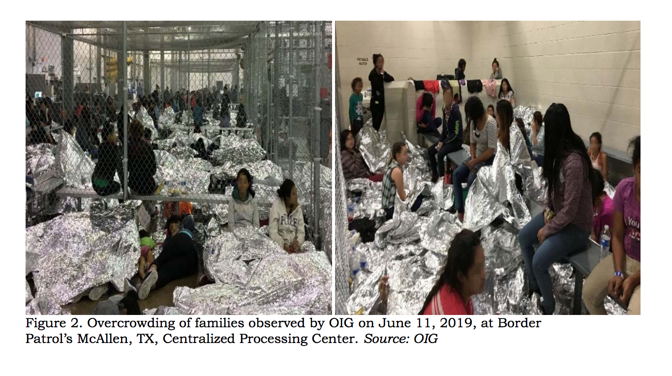
What a Pediatrician Saw Inside a Border Patrol Warehouse
[The Atlantic, , via Naked Capitalism 7-5-19]
Dolly Lucio Sevier evaluated dozens of sick children at a facility in South Texas. She found evidence of infection, malnutrition, and psychological trauma.
At Ursula, however, the children Sevier examined—like the panting 2-year-old—were “totally fearful, but then entirely subdued,” she told me. She could read the fear in their faces, but they were perfectly submissive to her authority. “I can only explain it by trauma, because that is such an unusual behavior,” she said. Sevier had brought along Mickey Mouse toys to break the ice, and the kids seem to enjoy playing with them. Yet none resisted, she said, when she took them away at the end of the exam. “At some point,” Sevier mused, “you’re broken and you stop fighting.”

....Border Patrol has long maintained that it is not equipped to handle children, who are supposed to be transferred into the custody of the Office of Refugee Resettlement within three days. After that, many kids are housed in licensed child-care facilities that look more like the average public school than a jail. The federal government has attributed slow transfers to the sharp uptick in the number of migrants at the southern border; in May, 144,200 migrants were taken into custody—the highest monthly total in 13 years.

Days before Sevier’s visit, reports of poor conditions at a similar facility in Clint, Texas, drew outrage around the country. Kevin McAleenan, the acting head of the Department of Homeland Security, told reporters the outcry was based on “unsubstantiated allegations regarding a single Border Patrol facility.”
But his own agency’s watchdogs soon contradicted him—the problems are not restricted to Clint.

Predatory Finance

Bloomberg Businessweek, via The Big Picture 7-6-19]
The British Virgin Islands is home to more than 400,000 companies that hold $1.5 trillion in assets.... Even though he helped get it up and running, Geluk doesn’t have permission to scan the whole database. In fact, only two people, a pair of unnamed employees of the BVI’s Financial Investigation Agency, are able to search the entire system, which holds details on about 600,000 owners who have directly or indirectly controlled companies here. It’s thought that roughly a third of all offshore companies globally are registered in the BVI....
The BVI’s place in the dark offshore economy was illuminated by the 2016 Panama Papers leak, in which 11.5 million documents from the law firm Mossack Fonseca were released by the International Consortium of Investigative Journalists. The disclosures sparked probes worldwide into money laundering, sanctions violations, and tax avoidance, and it didn’t pass without notice that more than half the companies outed in the leak were registered in the BVI. (The scandal should have been called the BVI Papers, more than a few people suggested.) It was clear from the disclosures that BVI regulation was inadequate, and that remains a concern today: Last year, BVI regulators conducted only four on-site inspections of financial firms.

Sunday, June 30, 2019

Week-end Wrap - Political Economy - June 29, 2019

Week-end Wrap - Political Economy - June 29, 2019
by Tony Wikrent
Economics Action Group, North Carolina Democratic Party Progressive Caucus

Strategic Political Economy

Jan Fichtner, Eelke Heemskerk, Javier Garcia-Bernardo, May 11, 2017 [The Conversation, via Alternet]


Disrupting mainstream economics

The new left economics: how a network of thinkers is transforming capitalism
[The Guardian, via Naked Capitalism 6-27-19]
There is a dawning recognition that a new kind of economy is needed: fairer, more inclusive, less exploitative, less destructive of society and the planet. “We’re in a time when people are much more open to radical economic ideas,” says Michael Jacobs, a former prime ministerial adviser to Gordon Brown. “The voters have revolted against neoliberalism. 

Climate and environmental crises

Mark Sumner, June 28, 2019 [DailyKos]
The five hottest European summers in the last 600 years have all come in the last twenty years. And 2019 is looking like it may provide not just the hottest day, but the hottest week, month, and year as the radically destabilized weather system continues to draw scalding air farther and farther north. Germany is experiencing it’s hottest June ever. Temperatures in Italy have turned deadly. And records have been shattered across at least six nations. The wave of hot air is also bringing up dust from the Sahara, prompting health warnings because of both temperatures and air quality.

Sunday, June 23, 2019

Week-end Wrap - Political Economy - June 22, 2019

Week-end Wrap - Political Economy - June 22, 2019
by Tony Wikrent
Economics Action Group, North Carolina Democratic Party Progressive Caucus

I apologize for the absence from last week. My computer crashed last Saturday night, and blew away a chunk of the operating system, so could not be rebooted until placed in the hands of a skilled PC doctor. I have begun searching for a feasible alternative PC at a low budget, and welcome any contributions to PayPal using my email address 2nbbooks@gmail.com. Thank you for your patience and understanding. 

Strategic Political Economy

Facebook's plan to create a global currency are insane and must be resisted. Ten good reasons: (
[Twitter by Nicholas Shaxson, author of Treasure Islands: Tax Havens and the Men Who Stole the World, via Naked Capitalism 6-21-19]

The way we structure money and payments is a question for democratic institutions, not technology companies.
By Matt Stoller [New York Times, via Twitter 6-20-19]
There are four core problems with Facebook’s new currency. The first, and perhaps the simplest, is that organizing a payments system is a complicated and difficult task, one that requires enormous investment in compliance systems.... 
The second problem is that, since the Civil War, the United States has had a general prohibition on the intersection between banking and commerce. Such a barrier has been reinforced many times, such as in 1956 with the Bank Holding Company Act and in 1970 with an amendment to that law during the conglomerate craze. Both times, Congress blocked banks from going into nonbanking businesses through holding companies, because Americans historically didn’t want banks competing with their own customers. Banking and payments is a special business, where a bank gets access to intimate business secrets of its customers. As one travel agent told Congress in 1970 when opposing the right of banks to enter his business, “Any time I deposited checks from my customers,” he said, “I was providing the banks with the names of my best clients.” 
Imagine Facebook’s subsidiary Calibra knowing your account balance and your spending, and offering to sell a retailer an algorithm that will maximize the price for what you can afford to pay for a product. Imagine this cartel having this kind of financial visibility into not only many consumers, but into businesses across the economy. Such conflicts of interest are why payments and banking are separated from the rest of the economy in the United States.... 
The third problem is that the Libra system — or really any private currency system — introduces systemic risk into our economy... 
We should not be setting up a private international payments network that would need to be backed by taxpayers because it’s too big to fail. 
And the fourth problem is that of national security and sovereignty....
Years ago, Mark Zuckerberg made it clear that he doesn’t think Facebook is a business. “In a lot of ways, Facebook is more like a government than a traditional company,” said Mr. Zuckerberg. “We’re really setting policies.” ...The way we structure money and payments is a question for democratic institutions. Any company big enough to start its own currency is just too big.

Restoring balance to the economy

“Poor People’s Moral Budget: Everybody Has the Right to Live” (PDF)
[Rev. Dr. William J. Barber II and Rev. Dr. Liz Theoharis, Poor People’s Campaign, via Naked Capitalism 6-19-19] 
From the “Findings”:

The United States has abundant resources for an economic revival that will move towards establishing a moral economy. This report identifies:
  • $350 billion in annual military spending cuts that would make the nation and the world more secure;
  • $886 billion in estimated annual revenue from fair taxes on the wealthy, corporations, and Wall Street;
  • and Billions more in savings from ending mass incarceration, addressing climate change, and meeting other key campaign demands.
The below comparisons demonstrate that policymakers have always found resources for their true priorities. It is critical that policymakers redirect these resources to establish justice and to prioritize the general welfare instead. The abundant wealth of this nation is produced by millions of people, workers, and families in this country and around the world. The fruits of their labor should be devoted to securing their basic needs and creating the conditions for them to thrive. At the same time, policymakers should not tie their hands with “pay-as-you-go” restrictions that require every dime of new spending to be offset with expenditure cuts or new revenue, especially given the enormous long-term benefits of most of our proposals. The cost of inaction is simply too great.
Lambert Strether notes: "This is, if not MMT, at least MMT-adjacent. It focuses on resources, not money, and it wants to drive a stake into PayGo’s heart-equivalent-if-any. The report is also a useful baseline for Democrat presidential candidates."


Ellen Brown: The American Dream is alive and well — in China
[Public Banking Institute 6-22-19]

Monday, June 17, 2019

Tony needs a new computer


And selling books isn't as lucrative as it once was.

So...

Anyone who feels generous can contribute to the "get Tony back online" fund. Contributions can be sent to his gmail address where he takes Paypal.

Thanks!

Sunday, June 9, 2019

Week-end Wrap - Political Economy - June 8, 2019

Week-end Wrap - Political Economy - June 8, 2019
by Tony Wikrent
Economics Action Group, North Carolina Democratic Party Progressive Caucus

You read it here first

The Green New Deal has forced into public discourse the fact that solving the crisis of climate change is going to require trillions of dollars of new investment. A recent example: 

Ocasio-Cortez: $10 trillion needed for effective climate plan
[The Hill, via Naked Capitalism 6-6-19]
Freshman Rep. Alexandria Ocasio-Cortez (D-N.Y.) said Wednesday that any plan to sufficiently address the climate crisis will need to cost at least $10 trillion. 
“I think we really need to get to $10 trillion to have a shot,” the progressive firebrand said in response to a question from The Hill in the Capitol. 
“I know it’s a ton," she added. "I don’t think anyone wants to spend that amount of money, it’s not a fun number to say, I’m not excited to say we need to spend $10 trillion on climate, but ... it’s just the fact of the scenario.”

If you had been reading this blog, Real Economics, in December 2014:
Dear Dems: Give me $100 trillion and I'll save your sorry ass
"$100 trillion to build a new economy" will be another test, but one that we need to impose over the coming two years. It can completely transform what issues are defined, and how, for the 2016 election. We need to get general public awareness of the need for "$100 trillion to build a new economy" - and how doable it actually is. Once we do that, it will be a relatively simple matter to determine if someone is serious about solving the problems we face. The next time we meet someone who is a leader in the Democratic Party, mention the fact that we need "$100 trillion to build a new economy" and watch carefully how they react. If they are hopeless neo-liberal water carriers for our would-be corporatist overlords, they will recoil in horror, or try to argue that such a huge amount is simply preposterous. Anyone who is stuck talking about programs of a few billion, or even a few hundred billion dollars, is simply completely uninformed about the problems we face - or just not willing to face reality - because reality is that we can no longer afford to let Wall Street play funny money games. We must figure out how to impose new laws and regulations that force banking and finance to serve the general welfare, not just private gain.
And about Trump and USA politics: if you had been reading this blog, Real Economics, in June 2014:
The best of times. The worst of times.
....what is needed to survive, we have already at hand. We have the science, and we have the technology. What we do not have is the political will to create crash programs to apply that science and technology, because that would require crushing our present rulers and leaders. Indeed, one half the formal political system in the USA has devoted itself to opposing science. And much of the other half has devoted itself to opposing technology. 
But what we lack most of all, is VISION. We do not have a coherent, plausible, positive vision. And without vision, the people will perish - another hard-learned lesson of human history the world's major religions warn us about. 
The 2008 Obama campaign showed us how powerful a vision of hope can be, no matter how much of a charade it might be. What do you think would be the electoral results if Democratic candidates starting telling people we are actually on the verge of a massive new economic boom? Because there is $100 trillion of work we need to do to solve the problem of climate change. This new boom will last for decades, just like the boom unleashed after World War 2 by meeting pent-up consumer demand and rebuilding Europe and Japan. I believe, in a few years or decades, the harshest and most important historical judgement of President Obama will be that he took office at a point where he could have led the nation and the world into a new golden age of capitalism, but instead chose to defend the status quo, and as a result the populist upsurge against the status quo veered right instead of left. (Bolding not in original 2014 posting.)

Tuesday, June 4, 2019

The possible routes to sustainability


Once in awhile, it's good to see what thoughtful grownups sound like when they discuss how exactly folks go about building a world that doesn't need to run on fossil fuels. Here Deutsche Welle follows some of the more promising strategies—e-mobility in Norway, the hydrogen strategy in Japan, etc. It's remarkably well done.


Sunday, June 2, 2019

Week-end Wrap - Political Economy - June 1, 2019

Week-end Wrap - Political Economy - June 1, 2019
by Tony Wikrent
Economics Action Group, North Carolina Democratic Party Progressive Caucus

Strategic Political Economy

[Valdai Discussion Club, via Naked Capitalism 5-26-19]
When analyzing the place that Russia and China occupy in each other’s bilateral trade, there is an imbalance arising from the difference in the size of the two economies. But it is hard to think of a way China could use it to blackmail or pressure Russia. Fuel and energy resources dominate Russia’s exports to China as well as Russian exports in general – fossil fuels accounted for 73 percent of its 2018 supplies. Russia is one of the main suppliers of oil to China, competing for first place with Saudi Arabia.
This does not speak well of the structure of the modern Russian economy. But, from a political standpoint, all prior experience tells us that trade in energy products creates a strong interdependence between supplier and buyer. Unlike other types of goods, any pressure on energy exporters is always associated with immediate and significant losses for the importing country, so it is only used as a last resort in rare cases. 

Tech cold war: how Trump’s assault on Huawei is forcing the world to contemplate a digital iron curtain
[South China Morning Post, via Naked Capitalism 5-26-19]
I distinctly remember 20 and more years ago repeatedly arguing with conservatives in AOL message boards that utilizing cheap Chinese labor for manufacturing was going to cause long-term strategic shifts and problems that would greatly afflict USA interests. Their responses were unequivocal and never varied: an ideological recitation of the benefits of free trade, most especially how trade with USA would sneakily introduce changes into China and force adoption of "democracy." The only variation from this line was the occasional addition of complaining that American workers were paid too much, and expected too much. 

[FifthDomain, via Naked Capitalism 5-26-19]

Mark Sumner, June 1, 2019 [DailyKos]

China’s Plan To Influence Global Commodity Pricing 
[SafeHaven, via Naked Capitalism 6-1-19]

The Electric Vehicle Revolution Will Come from China — not the US
by Lambert Strether [Naked Capitalism 5-26-19]

[Asia Times, via Naked Capitalism 5-27-19]

The Failure of Establishment Neoliberal Economics

After Neoliberalism
Joseph Stiglitz [Project Syndicate, via Naked Capitalism 5-31-19]
The neoliberal experiment – lower taxes on the rich, deregulation of labor and product markets, financialization, and globalization – has been a spectacular failure. Growth is lower than it was in the quarter-century after World War II, and most of it has accrued to the very top of the income scale. After decades of stagnant or even falling incomes for those below them, neoliberalism must be pronounced dead and buried.
Vying to succeed it are at least three major political alternatives: far-right nationalism, center-left reformism, and the progressive left (with the center-right representing the neoliberal failure). 
Three decades of neoliberal policies have decimated the middle class, our economy, and our democracy 
Joseph Stiglitz [MarketWatch, via Naked Capitalism 6-1-19]

Sunday, May 26, 2019

Week-end Wrap - Political Economy - May 25, 2019

Week-end Wrap - Political Economy - May 25, 2019
by Tony Wikrent
Economics Action Group, North Carolina Democratic Party Progressive Caucus

Strategic Political Economy

The radical plan to change how Harvard teaches economics
[Vox, via The Big Picture 5-25-19]Harvard finally has someone who is challenging Bush Dubya's economic guru Greg Mankiw in the teaching of introductory economics. Personally, I think Mankiw should be turned over to some impoverished country like Chad or Ecuador and tried for intellectual crimes against humanity. In the summer 2013 issue of Journal of Economic Perspectives, Mankiw published a paper entitled "Defending the One Percent."  (pdf)
Raj Chetty, a prominent faculty member whom Harvard recently poached back from Stanford, this spring unveiled “Economics 1152: Using Big Data to Solve Economic and Social Problems.” Taught with the help of lecturer Greg Bruich, the class garnered 375 students, including 363 undergrads, in its first term. That’s still behind the 461 in Ec 10 — but not by much. 
The courses could hardly be more different. Chetty has made his name as an empirical economist, working with a small army of colleagues and research assistants to try to get real-world findings with relevance to major political questions. And he’s focused on the roots and consequences of economic and racial inequality. He used huge amounts of IRS tax data to map inequality of opportunity in the US down to the neighborhood, and to show that black boys in particular enjoy less upward mobility than white boys. 
Ec 1152 is an introduction to that kind of economics. There’s little discussion of supply and demand curves, of producer or consumer surplus, or other elementary concepts introduced in classes like Ec 10.
Will China play rare earths card in clash with US?
[Asia Times, via Naked Capitalism 5-21-19]
“An American chemicals company and an Australian miner want to build a new supply chain for rare earths that bypasses China. The plan by Blue Line Corp. and Lynas Corp. is aimed at shoring up supplies of important commodities caught up in the U.S.-China trade conflict, … highlighting how companies are growing more worried about the Washington-Beijing showdown” [Wall Street Journal]. “Production of rare earths is dominated by China, and some of the world’s biggest buyers are U.S. technology companies that use rare earths in a wide range of electronics, including military equipment. The White House has been reluctant to impose tariffs on China’s rare-earths shipments, but China has slapped higher tariffs on American shipments of the unprocessed minerals. Lynas has become the largest producer of rare earths outside China and runs a unique supply chain shipping rare earths from Australia to Malaysia for processing.”

Sunday, May 19, 2019

Week-end Wrap - Political Economy - May 18, 2019

Week-end Wrap - Political Economy - May 18, 2019
by Tony Wikrent
Economics Action Group, North Carolina Democratic Party Progressive Caucus

[Machine Design Today 5-7-19]

Strategic Political Economy

The Pivot Point
[Craig Murray, via Naked Capitalism 5-17-19]
The massive economic shock following the banking collapse of 2007–8 is the direct cause of the crisis of confidence which is affecting almost all the institutions of western representative democracy. The banking collapse was not a natural event, like a tsunami. It was a direct result of man-made systems and artifices which permitted wealth to be generated and hoarded primarily through multiple financial transactions rather than by the actual production and sale of concrete goods, and which then disproportionately funnelled wealth to those engaged in the mechanics of the transactions. 
It was a rotten system, bound to collapse. But unfortunately, it was a system in which the political elite were so financially bound that the consequences of collapse threatened their place in the social order. So collapse was prevented, by the use of the systems of government to effect the largest ever single event transfer of wealth from the poor to the rich in the course of human history. Politicians bailed out the bankers by using the bankers’ own systems, and even permitted the bankers to charge the public for administering their own bailout, and charge massive interest on the money they were giving to themselves. This method meant that the ordinary people did not immediately feel all the pain, but they certainly felt it over the following decade of austerity as the massive burden of public debt that had been loaded on the populace and simply handed to the bankers, crippled the public finances. 
The mechanisms of state and corporate propaganda kicked in to ensure that the ordinary people were told that rather than having been robbed, they had been saved.
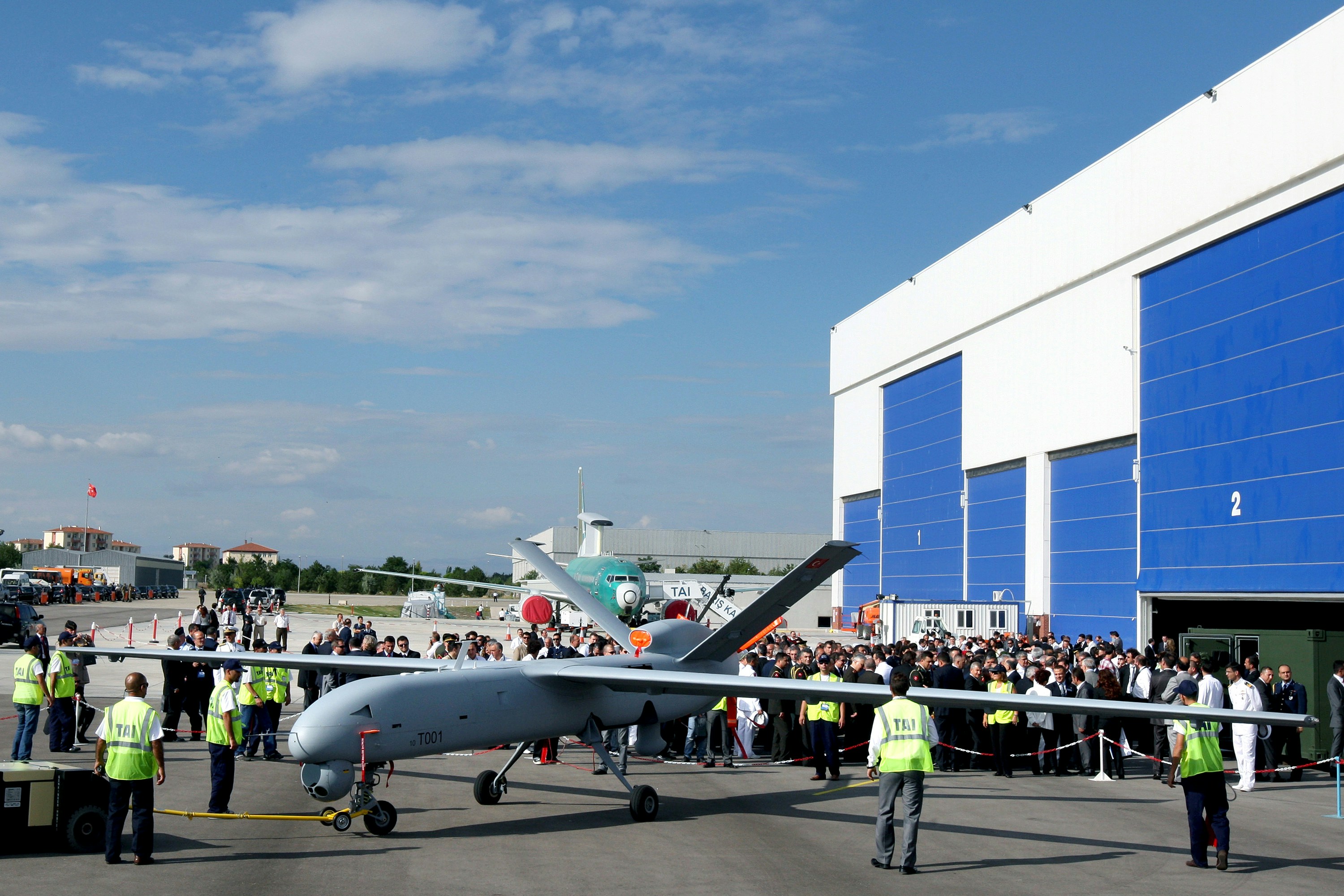
How Turkey Defied the U.S. and Became a Killer Drone Power
[Intercept, via Naked Capitalism 5-16-19]
Turkey now rivals the U.S. and the U.K. as the world’s most prolific user of killer drones, according to a review by The Intercept of reported lethal drone strikes worldwide. (Other countries that have reportedly killed people with drone-launched weapons include Israel, Iraq, and Iran.) The technology has been used by Turkey against ISIS in Syria and along Turkey’s border with Iraq and Iran, where ever-present Turkish drones have turned the tide in a decades-old counter-insurgency against the Kurdistan Workers’ Party, or PKK. 
While the U.S. was the foremost operator of armed, unmanned aerial vehicles (UAVs) in the world for more than a decade, launching the first drone attack in 2001, today more than a dozen countries possess this technology. The U.K., Israel, Pakistan, Saudi Arabia, the UAE, Egypt, Nigeria, and Turkey have all used armed UAVs to kill targets since 2015. Efforts by Washington to control proliferation through restrictions on drone exports have failed to slow down a global race to acquire the technology. Meanwhile, the U.S. has set a precedent of impunity by carrying out hundreds of strikes that have killed civilians over the last decade.
Turkey’s Anka drone showcased during a ceremony at Turkish Aerospace Space Industries Inc., near Ankara on July 16, 2010.

Sunday, May 12, 2019

Week-end Wrap - Political Economy - May 11, 2019

Week-end Wrap - Political Economy - May 11, 2019
by Tony Wikrent
Economics Action Group, North Carolina Democratic Party Progressive Caucus

[CommonDreams.com, via Avedon's Sideshow 4-28-19]
"The phrase is code for elites being pressured in ways they don't like, and is often a shield against legitimate criticism of corruption or dependence on corporate power."

Strategic Political Economy

[Ian Welsh, May 10, 2019]
You cannot have a good economy, where executives plan for the future, unless they need their companies to continue to do well. That means high progressive tax rates on income, on capital gains AND on unrealized capital and wealth, with no loops. 
Taxes on unrealized capital gains and wealth are necessary because if you don’t do that rich types don’t cash out capital, instead they use loans to pay their bills. When you’re worth 500 million or even just a 100 million, banks are happy to lend, at under 2%.
And this week, the perfect example of how a republic that does not throttle the rich has its economic policy severely distorted: 

“How the Koch Brothers Are Killing Public Transit Projects Around the Country” 
[New York Times, via Naked Capitalism 5-7-19]   
“At the heart of their effort is a network of activists who use a sophisticated data service built by the Kochs, called i360, that helps them identify and rally voters who are inclined to their worldview. It is a particularly powerful version of the technologies used by major political parties*. In places like Nashville, Koch-financed activists are finding tremendous success. Early polling here had suggested that the $5.4 billion transit plan would easily pass. It was backed by the city’s popular mayor and a coalition of businesses. Its supporters had outspent the opposition, and Nashville was choking on cars. But the outcome of the May 1 ballot stunned the city: a landslide victory for the anti-transit camp, which attacked the plan as a colossal waste of taxpayers’ money.”
High Speed Rail-- A Much Greener Way To Travel Than Airplane Or Auto... And Some Special Interests Opposing It
[DownWithTyranny, May 11, 2019]
Yesterday CNBC carried a very interesting piece on high peed rail-- and why the U.S. has fallen so woefully behind other nations. Jeniece Pettitt and Adam Isaak compared the U.S. to other countries: "China has the world's fastest and largest high-speed rail network-- more than 19,000 miles, the vast majority of which was built in the past decade. Japan's bullet trains can reach nearly 200 miles per hour and date to the 1960s. They have moved more than 9 billion people without a single passenger casualty. France began service of the high-speed TGV train in 1981 and the rest of Europe quickly followed... When the high speed rail between Madrid and Barcelona in Spain came into operation, air traffic just plummeted between those cities and everyone switched over to high speed rail which is very convenient. People were happy to do it; they weren't forced to switch. They did it because it was a nicer option to take high speed rail.

Friday, May 10, 2019

It's payback time, folks


There are moments when I simply cannot muster the energy to be a "good sport." Whenever I think about how this country just wasted 2+ years playing an ultra-corny version of spy vs. spy,  I literally want to see heads roll. It was not just the non-stop lying, it's that the lies were so stupidly unbelievable. And for extra fun, these lies were retailed by some of the writers I have read over the years on sites I once visited regularly—The Guardian, Smirking Chimp, Crooks and Liars...

Karma can be a bitch. Smirking Chimp is having trouble paying the bills. The Guardian will have serious problems recovering from Luke Harding's crazed book Collusion. Ms. Russiagate hoaxer, Rachael Madcow has taken a serious hit to her ratings.

I could be talked out of demanding the return of the guillotine, I guess, if we could all agree to stop listening to these partially developed minds stuck in their "tell me a story" phase of intellectual development. Personally, I am stunned that in a country of 315 million souls we cannot come up with the few thousand functioning adults necessary to organize a government.

Bob Mueller is 74. He probably won't be with us much longer. Writing his epitaph won't be easy. It difficult to say nice things about someone who knew his "investigation" was utter BS yet wasted the lives of the nation for years while he tried to come up with a reason to not tell us he had no case.

Robert Mueller Is in Serious Legal Trouble - Here's Why

James Howard Kunstler, 5/10/19

For the Progressive Democratic “Resistance” (PDR), post-Modernism is in full flower. They have ruled objective reality inadmissible. There are only stories — his story, her story, they’s story, zhe’s story, and you must believe them because they come out of lived experience — for instance the lived experience of having lost a sure-thing presidential election to a cartoon character with zero political experience, and then having lost the grand inquisition to oust him. For the PDRs, the metaphysical concept of reality refers to some land of dark make-believe over a distant horizon where numbers supposedly add up (ha!) and the actions of persons are said to entail a strange cosmic condition known as consequence.

Now that the Mueller Investigation has concluded empty of charges — despite two-plus-years of sedulous effort by fiercely dedicated antagonists of its target — everything about it, including the sacred Mueller Report, begins to emit odious vapors like unto a rump roast that has laid uncovered in a pantry for three weeks, attracting the attention of flies. The PDRs might think twice about a closer examination of all that festering material. What they’re liable to find is evidence of how slovenly and dishonest it was and how the revered legal maestro in charge of composing it may well be subject to charges himself of obstructing justice and malicious prosecution.

Information emerged over the weeks since the Mueller Report’s release that Mr. Mueller and his team knew unequivocally that the Special Counsel’s mission and the FBI operations that preceded it were based on concocted political bullshit supplied by Mrs. Clinton and her network of flunkies and fixers, ranging throughout the permanent DC bureacuracy (a.k.a. the Swamp), to outposts in foreign intel services and the political kitty-litter box known as Ukraine. Mr. Mueller must have suspected this from the outset, but knew for sure by the summer of 2017, and omitted to advise the American public that he had uncovered a fraud. Rather, he rode on the back of that fraud for two years, as if touring a political landfill on a donkey, leaving the public to stew in anxious hallucinations.

What else did Mr. Mueller do, or omit to do? He never engaged US government forensic computer analysts to examine the DNC servers at the heart of RussiaGate story. Rather, he allowed the conclusions to stand of a company called CrowdStrike, hired by the DNC itself to supposedly investigate the theft of emails, especially those of Clinton campaign chairman John Podesta. (See Craig Murray’s commentary on all this.) Mr. Mueller never bothered to interview the one person who might have known exactly who supplied the purloined emails to Wikileaks, namely Julian Assange. Mr. Mueller also did not bother to interview several dozen retired Intel Community computer experts, led by William Binney, former Technical Director of the NSA, who determined that the hack was accomplished by direct download by an insider onto a flash drive.

What could possibly be the explanation for these blunders. Well, we’re going to find out in the months ahead. The DPR chairs of various House committees have threatened to ask Mr. Mueller to testify. Bring it on, I say. He sure has some ‘splainin’ to do, if not in those venues, then in a more than a few grand juries that will be convened to assess the actions of his confederates-at-law from every hummock and gator pool in the Swamp. These various parties may also seek to understand why Mr. Mueller omitted to mention the now reeking Steele Dossier in his 444-page report, and why in his 20-plus page recounting of the oh-so-crucial Trump Tower meeting he never disclosed that the two Russians present were on the payroll of Hillary contractor FusionGPS, and met with its principal, Glenn Simpson before and after the meeting. It does give off a scent of “colluding with Russians,” except obviously the odor came from the wrong direction.

House Speaker Nancy Pelosi declared yesterday that we are in a constitutional crisis. You’re darn tootin’ we are, but it’s not coming from the flaccid threats of legal imbecile Jerrold Nadler (D-NY), who wants to prosecute the Attorney General, Mr. Barr, for refusing to make public grand jury records in the Mueller report — since the law requires Mr. Barr to not disclose the material. The crisis she mis-identifies is the coming indictment of so many supposedly untouchable and hallowed public figures, up to and including the former president, Mr. Obama, and the former heads of CIA, Mr. Brennan, and Director of National Security, Mr. Clapper, former Attorney General Loretta Lynch, the sainted Mr. Mueller, a whole posse of former Intel Community subalterns, and an unholy host of creeping, crawling, and flying swamp creatures from Glenn Simpson to the shyster lawyers at DNC law firm Perkins Coie, to the errand boys at the Cable News Networks, Wash-Po and The New York Times who trafficked in leaked perfidious documents — that the cumulative institutional damage will destroy public confidence in constitutional government per se.  more

Sunday, May 5, 2019

Week-end Wrap - Political Economy - May 4, 2019

Week-end Wrap - Political Economy - May 4, 2019
by Tony Wikrent
Economics Action Group, North Carolina Democratic Party Progressive Caucus

Strategic Political Economy

China’s population could peak in 2023, here’s why that matters
[CNBC, via Naked Capitalism 5-2-19]
China’s population is likely to peak in 2023, according to a study by online database company Global Demographics and analytics firm Complete Intelligence. The Chinese government had previously estimated that the country would hit its maximum population size in 2029.... The decline in births is driven by a “maternity cliff,” according to the report. The number of women of childbearing age in China — defined as aged 15 to 49 by the publishers — is set to fall from 346 million in 2018 to 318 million in 2023.
With fewer women of childbearing age and fewer births per 1,000 women, the total number of newborns will drop as well. The study predicts that 13.3 million babies will be born in 2023, down from 15.2 million last year.

The New Silk Roads reach the next level 
Asia Times, via Naked Capitalism 4-30-19]
....the West, as usual, ignored what was the absolutely key takeaway of the BRI forum: the deepening, on all fronts, of the Russia-China strategic partnership. It’s all here, in President Putin’s speech
Putin emphasized “harmonious and sustainable economic development and economic growth throughout the Eurasian space.” He noted how BRI “rhymes with Russia’s idea to establish a Greater Eurasian Partnership, a project designed to ‘integrate integration frameworks’, and therefore to promote a closer alignment of various bilateral and multilateral integration processes that are currently underway in Eurasia.”
Putin could not have been more specific. “The Eurasian Union…has already signed a free-trade agreement with Vietnam and a provisional agreement with Iran, paving the way to the creation of a free-trade area. The preparation of similar instruments with Singapore and Serbia is nearing completion, and talks are underway with Israel, Egypt and India. We cooperate actively with the Shanghai Cooperation Organization and the Association of Southeast Asian Nations.”

Addressing the forum, Putin added another enticing dimension, with the China-driven Maritime Silk Road possibly joining the Russia-driven Northern Sea Route, “a global and competitive route connecting northeastern, eastern and southeastern Asia with Europe” will emerge.

Disrupting mainstream economics

Economists Are Learning to Love the Minimum Wage
[City Lab, via The Big Picture 4-29-19]
....two new papers provide powerful evidence that higher minimum wages in fact boost the conditions of workers—especially the least skilled and lowest paid among them—without doing broad economic harm. 
The first paper is forthcoming in the prestigious Quarterly Journal of Economics and is currently available as a NBER working paper. (There is also a shorter, more reader-friendly research brief available.) It tracks the economic effects of more than 100 minimum-wage hikes across the country between 1979 and 2016.
Want to decrease suicide? Raise the minimum wage, researchers suggest 
[CBS News, via Naked Capitalism 5-1-19]

Sunday, April 28, 2019

Week-end Wrap - Political Economy - April 27, 2019

Week-end Wrap - Political Economy - April 27, 2019
by Tony Wikrent
Economics Action Group, North Carolina Democratic Party Progressive Caucus

Strategic Political Economy

Share of wealth held by the bottom 90% by country
[Real World Economics Review Blog, via Mike Norman Economics 4-24-19]


The Great Deformation: Why Income Inequality Has Become Intractable
Yves Smith, April 23, 2019 [Naked Capitalism]
Taylor’s talk last week focused on the drivers of the rise in inequality, which came about via a rise in profit share of GDP, something we first noted in 2005 in a Conference Board Review article. That has enabled the top 1% to pull away from everyone else. Investment as a proportion of GDP has also dropped while consumption has increased. The paper has more detail, but Taylor estimates it would take 40 years to reduce inequality to 1980 levels. He also warns that wealth concentration could increase from 40% held by the top 1% to 60%....
...advocates of workers have failed to take up the task of determining what a reasonable level of profit is. We’ve mentioned before that in the early 2000s, Warren Buffett deemed a profit share of 6% to be unsustainably high. Yet for the past three years, the profit share has been nearly twice this high. 
Oddly, the left and labor supporters have not engaged with the question of what a fair profit might be. Modern cultures have deeply internalized the idea that the result of market forces is somehow virtuous, when markets sit both in a legal system and in a set of societal norms that play a large role in what supply and demand looks like.

[Below via, via Naked Capitalism 4-23-19]
I'm reading 's new book, "People, Power, & Profits". Really appreciate this point about globalisation & wages:


Sunday, April 21, 2019

Week-end Wrap - Political Economy - April 20, 2019

Week-end Wrap - Political Economy - April 20, 2019
by Tony Wikrent
Economics Action Group, North Carolina Democratic Party Progressive Caucus

I have been looking at the work of Cornell University law professor Robert Hockett, who is serving as an economics adviser to Representative Alexandria Occasio-Cortez. I have been delighted to find that Hockett has been working the same angle I have: applying the classical republicanism that informed the creation of USA, to today's issues of political economy. Hockett's contribution is the development of the concept of what he calls "the producers' republic":
....the United States actually has a distinguished tradition of what I am calling “productive republican” finance. It is a tradition pursuant to which productive assets were deliberately spread broadly among diligent citizens ready to better the lives of themselves, their families, and ultimately their communities through thoughtful, hard work. 
Historically, the tradition is rooted in two complementary sources: first, an implicitly opportunity-egalitarian, “productive yeoman” colonial culture and subsequent national self-image, stemming in large measure from the Civic Republican and Classical Liberal ideological origins of the American republic; and second, an attendant suspicion of large aggregations of financial capital, stemming ultimately not only from the inconsistency of such aggregations with equal opportunity and productive yeomanry themselves, but also from many of the Founders’ and their forebears’ personal experiences, as agronomists, with exploitative absentee London banking concerns across the
Atlantic. 
This past January, Hockett was a participant in a small conference Money as a Democratic Medium, sponsored by Harvard University's Program on the Study of Capitalism, Institute for Global Law and Policy:
Money, governance, and public welfare are intimately connected in the modern world. More particularly, the way political communities make money and allocate credit is an essential element of governance. It critically shapes economic processes – channeling liquidity, fueling productivity, and influencing distribution. At the same time, those decisions about money and credit define key political structures, locating in particular hands the authority to mobilize resources, determining access to funds, and delegating power and privileges to private actors and organizations. 
Recognizing money and credit as public projects exposes issues of democratic purpose and possibility. In a novel focus, this conference makes those issues central. Scholars, policy makers, and students have often assumed that money and credit emerge from private exchange and entrepreneurial activity. Recent work, by contrast, emphasizes that modern currencies depend on collective orchestration. That approach resets the frame.
One of the participants was Jeffrey Sklansky, professor of history at the University of Illinois at Chicago and author of Sovereign of the Market: The Money Question in Early America (University of Chicago Press, 2017). Sklansky gave a brief but excellent overview of the career of Charles Macune, the head of the Southern Farmers' Alliance from 1886 to December 1889 and editor of its periodical, the National Economist, until 1892. Macune developed the Sub-Treasury idea to break the stranglehold the big banks and grain trading firms had on finance and credit for agriculture. There is precious little information available on Macune, and Sklansky has earned my deep respect for what he is doing.

Hockett's presentation is also in this video, as is that of Joseph R. Blasi of the Rutgers School of Management and Labor Relations, "The Citizen's Share: Reducing Inequality in the 21st Century"

This is only one of about a dozen YouTube videos of the Money as a Democratic Medium conference.

In Having a Stake: Evidence and Implications for Broad-based Employee Stock Ownership and
Profit Sharing, Blasi writes about the federally mandated profit sharing the administration of George Washington imposed on the cod fishery to rebuild it, after the British had nearly destroyed it because it trained so many of the officers and sailors in the American navy.
....Jefferson, Washington, and the Congress chose to help the industry get back on its feet by what was essentially a tax cut (in lieu of tariffs paid for supplies coming from outside the U.S.) to the owners and workers of the cod fishery on the condition that the ship owners share the tax credits with all the workers.... they rejected outright subsidies to the wealthy owners who controlled the boats and warehouses on the basis that any government tax credits had to include workers. The law was explicit in its sharing criterion: owners had to share five-eighths of the credit with the crew, and additionally have a signed agreement with the captain and crew for broad-based profit sharing on the entire catch throughout the voyage. The tax credits were administered by the Treasury Department headed by Alexander Hamilton through the port Customs’ Houses. The arrangement helped rejuvenate the industry. Congress continued it for many decades. See The Citizen’s Share: Reducing Inequality in the 21st Century, Joseph R. Blasi, Richard B. Freeman, and Douglas L. Kruse. (New Haven: Yale University Press, 2013), 1-8. See also the Report on the American Fisheries by Secretary of State Jefferson.
[Public Banling Institute 4-20-19]
Thomas Marois, Senior Lecturer in Development Studies at the University of London and recent guest on It’s Our Money with Ellen Brown, argues that until people regain control of money and credit, we will not be able to stop economic and ecological crises.
“There’s really no option. We can’t simply relegate the question of money and finance and credit … We can’t do anything until we have control of money. And to leave that to the private sector is a strategic mistake because then they control that agenda. They control credit. They control access to credit.”

Friday, April 19, 2019

Sandy Munro does a teardown analysis of Tesla


This YouTube interview of Sandy Monro is interesting to the point of being profound. Some background.

Monroe lives in Michigan and has a bunch of commercial ties to the car business. His specialty is tearing down cars to see how they were built and whether better production practices could make a better car. His company has about 100 employees, because cars are incredibly complex with dozens of systems so he needs a wide assortment of specialists.

The reason Monro has become a sensation is because he tore down an early Tesla Model 3. At first he was pretty critical but as time has gone on he has become convinced that most legacy automakers are now almost hopelessly behind. He has some wonderful stories about how institutional inertia works at a place like Ford Motor. His inside look at Teslas will probably sell well for at least a decade

And then he says some really enlightening things about China and their rapid industrialization plans. His observations may be skewed because he is probably meeting their best and brightest, but even taking a hefty discount for that, the story is still about as compelling a look at China as anything I have seen in a long time—maybe ever.